Titre
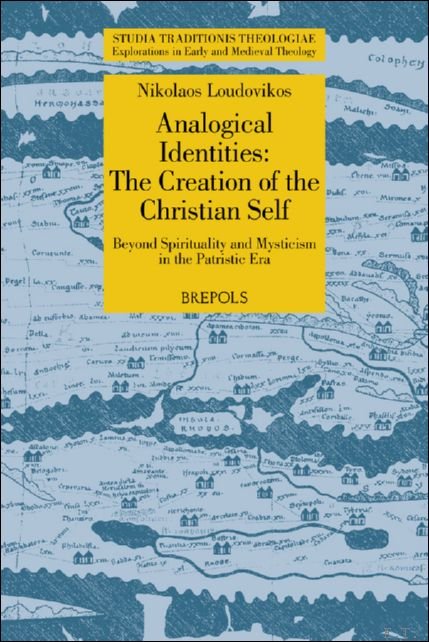
Analogical Identities: The Creation of the Christian Self. Volume 1: Beyond Spirituality and Mysticism in the Patristic Era
Auteur
Nikolaos Loudovikos
Éditeur
, Brepols, 2020
Prix
€ 80,00
Frais de livraison
€ 6,99
Détails
Paperback, xvi + 386 pages, Size:156 x 234 mm, Languages: English, Greek, Latin. ISBN 9782503578156.
Plus d'informations
Summary Is it possible for nihilism and an ontology of personhood as will to power to be incubated in the womb of Christian Mysticism? Is it possible that the modern ontology of power, which constitutes the core of the Greek-Western metaphysics, has a theological grounding? Has Nietszche reversed Plato or, more likely, Augustine and Origen, re-fashioning in a secular framework the very essence of their ontology? Do we have any alternative Patristic anthropological sources of the Greek-Western Self, beyond what has been traditionally called "Spirituality" or "Mysticism"? Patristic theology seems to ultimately provide us with a different understanding of selfhood, beyond any Ancient or modern, Platonic or not, Transcendentalism. This book strives to decipher, retrieve, and re-embody the underlying mature Patristic concept of selfhood, beyond the dichotomies of mind and body, essence and existence, transcendence and immanence, inner and outer, conscious and unconscious, person and nature, freedom and necessity: the Analogical Identity of this Self needs to be explored. TABLE OF CONTENTS Preface Abbreviations Introduction PART ONE. THE MEANING OF SPIRITUAL BEING Augustine and Origen: a study of the presuppositions of Western and Eastern spirituality, and some modern repercussions Chapter One Augustine, Origen, and the Person as Will to Power. The ontology of power 1. Representative eudemonism and the spirituality of the soul as thinking 2. A spiritualistic theory of knowledge. The violence of the spiritual and 'monophysitism' 3. Origen, following his parallel way 4. The thinking soul as light and the spirituality of the will to power 5. Knowledge of God through consciousness and the ontologization of the psychological 6. The genesis of the ontology of the person as will to power. The ontology of power and phenomenality 7. The will to power as a historical concern PART TWO. ON WILL AND NATURE, ON PERSON AND CONSUBSTANTIALITY Chapter One Maximus the Confessor's Theology of the Will and the complete Selfhood 1. The limits of ancient will and the new opening 2. The theology of the will in the anti-monophysite anthropology of Maximus the Confessor 3. A theologico-philosophical appendix to this chapter: is it possible to transcend naturalism in the ontology of the person and of history? Chapter Two Symeon the New Theologian and the Eschatological Ontology of the Nature of Creation 1. History 2. The unfamiliarity of Being and melancholy 3. The familiarity of the Being through repentance as an eschatology of consubstantiality 4. Eucharistic Vigilance and Judgment: The Christology of Light 5. The embodied intellect and the poetics of matter. Joy 6. The Eschatological denial of the 'Spiritual' and Eucharistic Apophaticism Chapter Three The Neo-Platonic Root of Angst and the Theology of the Real On being existence and contemplation, Plotinus-Aquinas-Palamas 1. The infinite, contemplation and angst 2. Deficient existence and the angst of its contemplation: Plotinus and Thomas Aquinas 3. The real as nature and vision of God. Saint Gregory Palamas 4. From the undermining of the real to its theology Concluding Addition: The 'second Absolute' and the misreadings of Hesychasm Nietzschean readings of Hesychasm? Chapter Four World and Existence, Nature and Person: The Being of Self and the Meaning of Its Consubstantial Universality 1. The Individual without the World. Epictetus 2. The World without the Individual. From Buddha to Schopenhauer 3. Individual and World, Person and Nature. Self and its Consubstantial Universality of its Being in Patristic Thought a) On Consubstantiality, on the Person and on Nature b) Beyond the Ontologization of the Person: the Meaning of Self PART THREE. CONCLUDING DISCUSSION Beyond Spirituality and Mysticism: The Poiesis/Creation of the Self as an Analogical Identity 1. Weighing Christian anthropological (Neo)Platonism in East and West 2. Medieval repercussions 3. Descartes' Augustinian happiness and beyond 4. The Will to Power and the Nietzschean Obelisk: an Autonomous Infinity 5. Objections, Wise and non-Wise: a Parenthesis 6. The Will to Consubstantiality: the Vessel in the Open Sea 7. The Heart of the Ocean: the Poiesis/Creation of a New Self 8. An Analogical Identity Appendix 1: Person instead of Grace and Dictated Otherness: John Zizioulas's Final Theological Position Appendix 2: Dialogical nature, Enousion Person, and Non-ecstatic Will in Maximus the Confessor: The Conclusion of a long Debate Appendix 3: An Aquinas for the Future BIBLIOGRAPHY Ancient and Medieval Authors Modern Authors INDEXES Index of Authors Index of Modern Scholars Index of Concepts
Images

Erik Tonen Books
Antwerpen
Bedankt voor uw bestelling bij Erik Tonen Books! **De verzendkosten NL en BE bedragen bij ons altijd €6,99 per bestelling, ongeacht gewicht en formaat.
- Tous les livres sont en état complet et normal, sauf indication contraire. De petites imperfections comme une page collée ou un nom sur la feuille ne sont pas toujours mentionnés
- Vous gérez directement cette commande avec Erik Tonen Books
- Après votre commande vous et Erik Tonen Books recevrez une confirmation par e-mail. Dans l'e-mail que vous pouvez trouver, vous pouvez trouver le nom et l'adresse de Erik Tonen Books
- L'acheteur paie les frais de livraison, sauf accord contraire
- Erik Tonen Books peut demander un prépaiement
- Boekwinkeltjes.nl essaie de rapprocher les acheteurs et les vendeurs. Boekwinkeltjes.nl n'est jamais impliqué dans un accord entre l'acheteur et le vendeur. Si vous avez un différend avec un ou plusieurs utilisateurs, vous devez le réparer vous-même. Vous indemnisez Boekwinkeltjes.nl de toute réclamation.