Titre
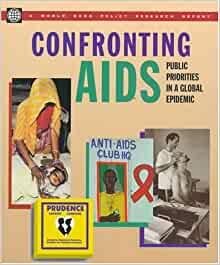
Confronting Aids: Public Priorities in a Global Epidemic.
Auteur
Department, World Bank Policy Research.
ISBN
9780195211177
Éditeur
Oxford : Oxford University Press, 1997. Paperback. Library stamps. 353 pp. Conditie: goed
Prix
€ 12,50
Détails
Conditie: goed. MEDICINE
Plus d'informations
Two decades after the appearance of human immunodeficiency virus (HIV), the HIV/AIDS epidemic has spread across the industrialized and developing world. Of the estimated 30 million people, who have contracted the virus, 6 million have died of AIDS. About 90 percent of worldwide infections occur developing countries, where disease has already reduced life expectancy in some cases by more than a decade. HIV, already widespread among the general population of many Sub-Saharan African countries, many be on the verge of exploding in other regions; the number of new infections occurring each year in Asia may already have surpassed those in Africa. Because most people who contract HIV are adults in the prime of life, AIDS extracts a heavy toll on surviving family, especially children and the elderly, and is likely to exacerbate poverty and inequality. Clearly, the human and economic toll of the epidemic is great. But efforst to combat HIV use resources that could also have been applied to other pressing human needs, especially in the lowest income countries. How should developing country governments and the international community respond? This book provides strategy for policymakers, development specialists, public health experts, and others in a position to influence the public response to the epidemic to consider how society and governments in particular should intervene to confront HIV/AIDS. In doing so it draw upon three bodies of knowledge: the epidemiology of HIV: public health insights into disease control; and especially public economics, which focuses on assessing tradeoffs in the allocation of scarce resources. The report argues that AIDS is a large and growing problem and that governments can and should actively confront the epidemic. It finds that some policies will be much more effective than others, and it disticnguishes between activities that should be left to households and the private sector, including non-governmental organizations (NGOs); those that should be initiated by developing governments; and those that can best be undertaken by the international development community.

- Tous les livres sont en état complet et normal, sauf indication contraire. De petites imperfections comme une page collée ou un nom sur la feuille ne sont pas toujours mentionnés
- Vous gérez directement cette commande avec Kloof Antiquariaat
- Après votre commande vous et Kloof Antiquariaat recevrez une confirmation par e-mail. Dans l'e-mail que vous pouvez trouver, vous pouvez trouver le nom et l'adresse de Kloof Antiquariaat
- L'acheteur paie les frais de livraison, sauf accord contraire
- Kloof Antiquariaat peut demander un prépaiement
- Boekwinkeltjes.nl essaie de rapprocher les acheteurs et les vendeurs. Boekwinkeltjes.nl n'est jamais impliqué dans un accord entre l'acheteur et le vendeur. Si vous avez un différend avec un ou plusieurs utilisateurs, vous devez le réparer vous-même. Vous indemnisez Boekwinkeltjes.nl de toute réclamation.