Titre
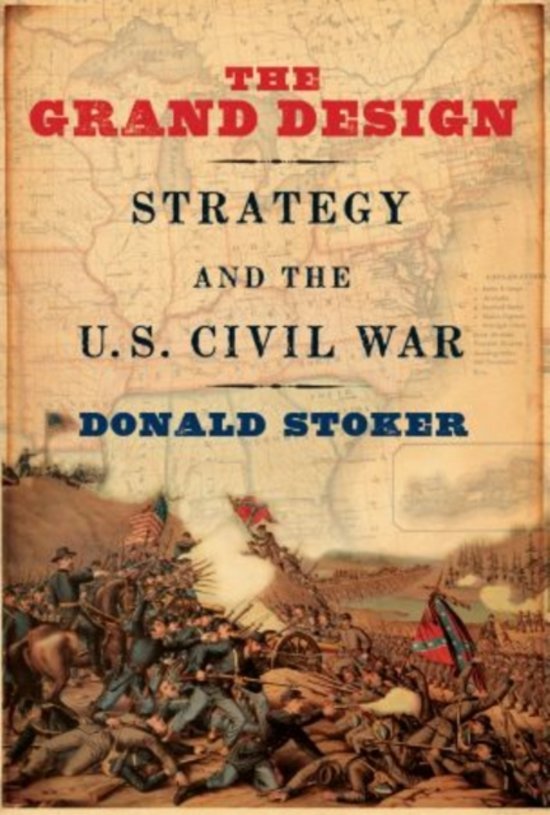
The Grand Design. Strategy and the U.S. Civil War
Auteur
Stoker, Donald
Langue
Anglais
ISBN
9780195373059
Éditeur
Oxford University Press
Prix
€ 19,50(Excl. toute livraison)
Disponible
2 copies
Détails
2010, 498 pp., hardcover met stofomslag. NIEUWSTAAT
Plus d'informations
Nieuwstaat.
Of the tens of thousands of books exploring virtually every aspect of the Civil War, surprisingly little has been said about what was in fact the determining factor in the outcome of the conflict: differences in Union and Southern strategy. In The Grand Design, Donald Stoker provides a comprehensive and often surprising account of strategy as it evolved between Fort Sumter and Appomattox. Reminding us that strategy is different from tactics (battlefield deployments) and operations (campaigns conducted in pursuit of a strategy), Stoker examines how Abraham Lincoln and Jefferson Davis identified their political goals and worked with their generals to craft the military means to achieve them-or how they often failed to do so. Stoker shows that Davis, despite a West Point education and experience as Secretary of War, failed as a strategist by losing control of the political side of the war. His invasion of Kentucky was a turning point that shifted the loyalties and vast resources of the border states to the Union. Lincoln, in contrast, evolved a clear strategic vision, but he failed for years to make his generals implement it. At the level of generalship, Stoker notes that Robert E. Lee correctly determined the Union's center of gravity, but proved mistaken in his assessment of how to destroy it. Stoker also presents evidence that the Union could have won the war in 1862, had it followed the grand plan of the much-derided general, George B. McClellan. Historians have often argued that the North's advantages in population and industry ensured certain victory. In The Grand Design, Stoker reasserts the centrality of the overarching military ideas-the strategy-on each side, arguing convincingly that it was strategy that determined the war's outcome.
Of the tens of thousands of books exploring virtually every aspect of the Civil War, surprisingly little has been said about what was in fact the determining factor in the outcome of the conflict: differences in Union and Southern strategy. In The Grand Design, Donald Stoker provides a comprehensive and often surprising account of strategy as it evolved between Fort Sumter and Appomattox. Reminding us that strategy is different from tactics (battlefield deployments) and operations (campaigns conducted in pursuit of a strategy), Stoker examines how Abraham Lincoln and Jefferson Davis identified their political goals and worked with their generals to craft the military means to achieve them-or how they often failed to do so. Stoker shows that Davis, despite a West Point education and experience as Secretary of War, failed as a strategist by losing control of the political side of the war. His invasion of Kentucky was a turning point that shifted the loyalties and vast resources of the border states to the Union. Lincoln, in contrast, evolved a clear strategic vision, but he failed for years to make his generals implement it. At the level of generalship, Stoker notes that Robert E. Lee correctly determined the Union's center of gravity, but proved mistaken in his assessment of how to destroy it. Stoker also presents evidence that the Union could have won the war in 1862, had it followed the grand plan of the much-derided general, George B. McClellan. Historians have often argued that the North's advantages in population and industry ensured certain victory. In The Grand Design, Stoker reasserts the centrality of the overarching military ideas-the strategy-on each side, arguing convincingly that it was strategy that determined the war's outcome.
Images
boekmakelaar
Maastricht 
Betaling met paypal is mogelijk.
Afhalen van boeken in overleg.
Na één dag geen antwoord, kijk dan in je spambox.
- Tous les livres sont en état complet et normal, sauf indication contraire. De petites imperfections comme une page collée ou un nom sur la feuille ne sont pas toujours mentionnés
- Vous gérez directement cette commande avec boekmakelaar
- Après votre commande vous et boekmakelaar recevrez une confirmation par e-mail. Dans l'e-mail que vous pouvez trouver, vous pouvez trouver le nom et l'adresse de boekmakelaar
- L'acheteur paie les frais de livraison, sauf accord contraire
- boekmakelaar peut demander un prépaiement
- Boekwinkeltjes.nl essaie de rapprocher les acheteurs et les vendeurs. Boekwinkeltjes.nl n'est jamais impliqué dans un accord entre l'acheteur et le vendeur. Si vous avez un différend avec un ou plusieurs utilisateurs, vous devez le réparer vous-même. Vous indemnisez Boekwinkeltjes.nl de toute réclamation.