Titre
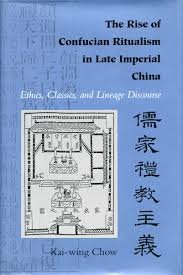
The Rise of Confucian Ritualism in Late imperial China. Ethics, Classics, and Lineage Discourse
Auteur
Chow, Kai-Wing
Langue
Anglais
ISBN
9780804721738
Éditeur
Stanford University Press
Prix
€ 49,50(Excl. toute livraison)
Détails
1994, 344 pp., linnen band met stofomslag. Als nieuw
Plus d'informations
Als nieuw.
This pathbreaking work argues that the major intellectual trend in China from the seventeenth through the early nineteenth century was Confucian ritualism as expressed in ethics, classical learning, and discourse on lineage.
The conquest of China by the Manchus and the establishment of the Ching dynasty in the mid-seventeenth century provoked both political and identity crises for Chinese intellectuals. As a result, they returned to the classical heritage in an intensified search for pure Confucian doctrine and a ritualist expression of cultural identity under alien rule. Through the performance of rites, especially those concerned with family and lineage, the early Ching scholars believed they could cultivate Confucian virtues and rebuild a social order broadly based on kinship organization.
The quest for pure Confucian doctrine and rituals resulted not only in the revival of the exegetical tradition of Sung neo-Confucians in the early Ching, but also the rise of the Han learning movement in the mid-eighteenth century. Within the ritualist framework, many Confucian literati re-examined their role in relation to the Confucian heritage, the imperial state, and the common people.
Despite the growing centralization of power, the imperial state had to rely on the gentry to preserve order at the local level. Popular unrest, rebellion, and the swift collapse of local resistance to the Manchu conquest convinced many gentry of the need for a local institution that would unify society and allow the gentry to control and channel popular forces. They came to see lineage as the answer. The author shows how Confucian ritualism, with its emphasis on family and lineage, became a broad movement of social reform that emphasized conformity and clearly prescribed rules of behavior, expressed notably in the growing cult of patrilineal descent and female chastity. Through their manipulation of well-organized lineages, the gentry were able to achieve a dominant role in shaping and maintaining local order.
This pathbreaking work argues that the major intellectual trend in China from the seventeenth through the early nineteenth century was Confucian ritualism as expressed in ethics, classical learning, and discourse on lineage.
The conquest of China by the Manchus and the establishment of the Ching dynasty in the mid-seventeenth century provoked both political and identity crises for Chinese intellectuals. As a result, they returned to the classical heritage in an intensified search for pure Confucian doctrine and a ritualist expression of cultural identity under alien rule. Through the performance of rites, especially those concerned with family and lineage, the early Ching scholars believed they could cultivate Confucian virtues and rebuild a social order broadly based on kinship organization.
The quest for pure Confucian doctrine and rituals resulted not only in the revival of the exegetical tradition of Sung neo-Confucians in the early Ching, but also the rise of the Han learning movement in the mid-eighteenth century. Within the ritualist framework, many Confucian literati re-examined their role in relation to the Confucian heritage, the imperial state, and the common people.
Despite the growing centralization of power, the imperial state had to rely on the gentry to preserve order at the local level. Popular unrest, rebellion, and the swift collapse of local resistance to the Manchu conquest convinced many gentry of the need for a local institution that would unify society and allow the gentry to control and channel popular forces. They came to see lineage as the answer. The author shows how Confucian ritualism, with its emphasis on family and lineage, became a broad movement of social reform that emphasized conformity and clearly prescribed rules of behavior, expressed notably in the growing cult of patrilineal descent and female chastity. Through their manipulation of well-organized lineages, the gentry were able to achieve a dominant role in shaping and maintaining local order.
Images
boekmakelaar
Maastricht 
Betaling met paypal is mogelijk.
Afhalen van boeken in overleg.
Na één dag geen antwoord, kijk dan in je spambox.
- Tous les livres sont en état complet et normal, sauf indication contraire. De petites imperfections comme une page collée ou un nom sur la feuille ne sont pas toujours mentionnés
- Vous gérez directement cette commande avec boekmakelaar
- Après votre commande vous et boekmakelaar recevrez une confirmation par e-mail. Dans l'e-mail que vous pouvez trouver, vous pouvez trouver le nom et l'adresse de boekmakelaar
- L'acheteur paie les frais de livraison, sauf accord contraire
- boekmakelaar peut demander un prépaiement
- Boekwinkeltjes.nl essaie de rapprocher les acheteurs et les vendeurs. Boekwinkeltjes.nl n'est jamais impliqué dans un accord entre l'acheteur et le vendeur. Si vous avez un différend avec un ou plusieurs utilisateurs, vous devez le réparer vous-même. Vous indemnisez Boekwinkeltjes.nl de toute réclamation.