Titre
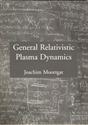
General Relativistic Plasma Dynamics
Auteur
Moortgat, J. B.
Langue
Anglais
ISBN
9789090204932
Éditeur
Moortgat, J.B. 2006 9789090204932
Prix
€ 22,60
Détails
proefschrift, paperback 139pp. als nieuw, heel schaars boek
Plus d'informations
From Wikipedia, the free encyclopedia
Jump to navigationJump to search
Relativistic plasmas in physics are plasmas for which relativistic corrections to a particle's mass and velocity are important. Such corrections typically become important when a significant number of electrons reach speeds greater than 0.86c (Lorentz factor {\displaystyle \gamma }\gamma =2).
Such plasmas may be created either by heating a gas to very high temperatures or by the impact of a high-energy particle beam. A relativistic plasma with a thermal distribution function has temperatures greater than around 260 keV, or 3.0 GK (5.5 billion degrees Fahrenheit), where approximately 10% of the electrons have {\displaystyle \gamma 2}{\displaystyle \gamma 2}. Since these temperatures are so high, most relativistic plasmas are small and brief, and are often the result of a relativistic beam impacting some target. (More mundanely, "relativistic plasma" might denote a normal, cold plasma moving at a significant fraction of the speed of light relative to the observer.)
Relativistic plasmas may result when two particle beams collide at speeds comparable to the speed of light, and in the cores of supernovae. Plasmas hot enough for particles other than electrons to be relativistic are even more rare, since other particles are more massive and thus require more energy to accelerate to a significant fraction of the speed of light. (About 10% of protons would have {\displaystyle \gamma 2}{\displaystyle \gamma 2} at a temperature of 481 MeV - 5.6 TK.) Still higher energies are necessary to achieve a quark–gluon plasma.
The primary changes in a plasma's behavior as it approaches the relativistic regime is slight modifications to the equations which describe a non-relativistic plasma and to collision and interaction cross sections. The equations may also need modifications to account for pair production of electron-positron pairs (or other particles at the highest temperatures).
A plasma double layer with a large potential drop and layer separation, may accelerate electrons to relativistic velocities, and produce synchrotron radiation.
Jump to navigationJump to search
Relativistic plasmas in physics are plasmas for which relativistic corrections to a particle's mass and velocity are important. Such corrections typically become important when a significant number of electrons reach speeds greater than 0.86c (Lorentz factor {\displaystyle \gamma }\gamma =2).
Such plasmas may be created either by heating a gas to very high temperatures or by the impact of a high-energy particle beam. A relativistic plasma with a thermal distribution function has temperatures greater than around 260 keV, or 3.0 GK (5.5 billion degrees Fahrenheit), where approximately 10% of the electrons have {\displaystyle \gamma 2}{\displaystyle \gamma 2}. Since these temperatures are so high, most relativistic plasmas are small and brief, and are often the result of a relativistic beam impacting some target. (More mundanely, "relativistic plasma" might denote a normal, cold plasma moving at a significant fraction of the speed of light relative to the observer.)
Relativistic plasmas may result when two particle beams collide at speeds comparable to the speed of light, and in the cores of supernovae. Plasmas hot enough for particles other than electrons to be relativistic are even more rare, since other particles are more massive and thus require more energy to accelerate to a significant fraction of the speed of light. (About 10% of protons would have {\displaystyle \gamma 2}{\displaystyle \gamma 2} at a temperature of 481 MeV - 5.6 TK.) Still higher energies are necessary to achieve a quark–gluon plasma.
The primary changes in a plasma's behavior as it approaches the relativistic regime is slight modifications to the equations which describe a non-relativistic plasma and to collision and interaction cross sections. The equations may also need modifications to account for pair production of electron-positron pairs (or other particles at the highest temperatures).
A plasma double layer with a large potential drop and layer separation, may accelerate electrons to relativistic velocities, and produce synchrotron radiation.
Images

hasselman
Breda 
Levering binnen Nederland ( 3,90 euro verzendkosten )
Levering binnen de EU is mogelijk bij bestellingen vanaf 15 euro plus bijkomende internationale verzendkosten.
Afhalen is niet mogelijk.
- Tous les livres sont en état complet et normal, sauf indication contraire. De petites imperfections comme une page collée ou un nom sur la feuille ne sont pas toujours mentionnés
- Vous gérez directement cette commande avec hasselman
- Après votre commande vous et hasselman recevrez une confirmation par e-mail. Dans l'e-mail que vous pouvez trouver, vous pouvez trouver le nom et l'adresse de hasselman
- L'acheteur paie les frais de livraison, sauf accord contraire
- hasselman peut demander un prépaiement
- Boekwinkeltjes.nl essaie de rapprocher les acheteurs et les vendeurs. Boekwinkeltjes.nl n'est jamais impliqué dans un accord entre l'acheteur et le vendeur. Si vous avez un différend avec un ou plusieurs utilisateurs, vous devez le réparer vous-même. Vous indemnisez Boekwinkeltjes.nl de toute réclamation.